
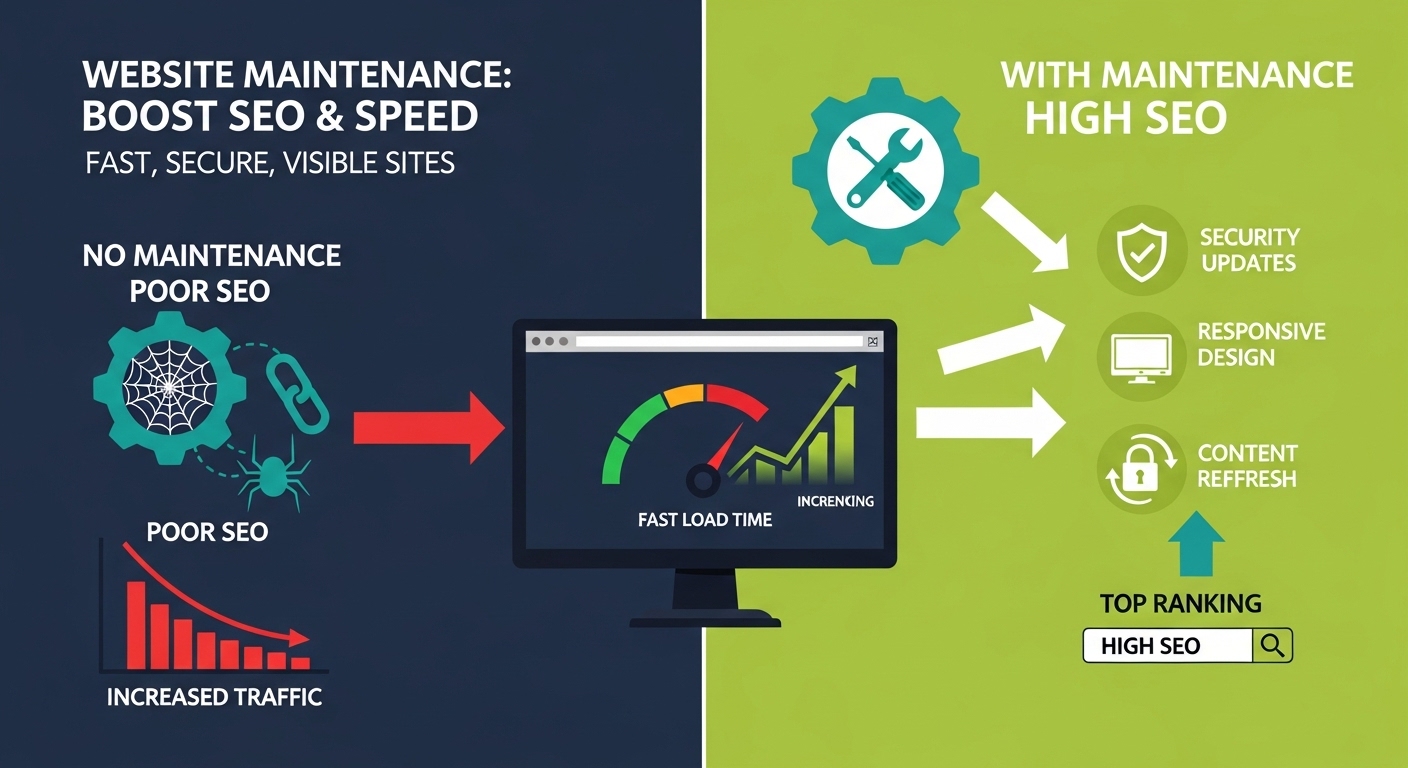
Your website is not a one-time project. Just like vehicles need regular servicing to run smoothly, your website also needs consistent care to perform well. Many business owners invest heavily in design and SEO at launch but forget that both depend on continuous maintenance. A neglected website may look fine on the surface but quietly loses rankings, speed, and trust over time.
The Link Between Website Maintenance and SEO
Search engines like Google reward websites that are fast, secure, and regularly updated. Website maintenance directly affects these ranking factors. Outdated plugins, broken links, and slow loading pages all send negative signals to search engines. A poorly maintained site can slip down in search results even if it once ranked well.
Maintenance is not just about fixing issues. It includes performance monitoring, software updates, link audits, content refreshes, and regular backups. Each of these actions helps search engines see your website as active, reliable, and user-friendly.
Speed and Performance Matter
Website speed has become a core ranking factor in Google’s algorithm. A slow site increases bounce rate, reduces user satisfaction, and damages SEO performance. Regular maintenance keeps your site optimized by cleaning up unnecessary files, compressing images, and updating plugins that affect load time.
If your pages take more than three seconds to load, most visitors will leave before seeing your content. This affects both user engagement and search visibility. Routine speed checks ensure that your website continues to meet modern performance standards.
Security and Trust Signals
Another major reason for regular maintenance is website security. Hackers often target outdated websites that have not been updated for months. A security breach can lead to downtime, lost traffic, and long-term damage to your brand’s credibility.
Search engines also recognize secure websites as more trustworthy. A maintained site with an active SSL certificate and regular security scans tells Google that your business values user protection. That trust translates into better rankings and more customer confidence.
Fresh Content Improves Visibility
Regular maintenance includes reviewing and updating existing content. Refreshing old posts with new data, keywords, or internal links helps search engines crawl your website more often. It signals that your business is active and relevant.
Websites that publish consistent updates are also more likely to attract backlinks and social shares, which further improve search rankings.
Key Points to Remember
- Website maintenance directly affects SEO rankings and performance.
- Regular updates improve speed, security, and user experience.
- Outdated or broken websites lose visibility over time.
- Secure, active websites earn higher trust from both users and search engines.
- Treat maintenance as an ongoing investment, not a one-time task.
FAQs
Q1: How often should I perform website maintenance for SEO?
A: Basic maintenance such as updates, backups, and link checks should be done monthly. A full SEO and performance audit is recommended every three to six months.
Q2: Can a poorly maintained website lose its Google ranking?
A: Yes. Broken links, outdated software, and slow loading times can all lead to lower rankings and reduced visibility in search results.
Q3: Does updating website content improve SEO?
A: Absolutely. Regularly refreshing your pages with updated information and keywords keeps your site relevant and encourages Google to re-crawl your content.
Q4: How does website speed affect SEO performance?
A: Speed influences user experience and bounce rate. Faster websites rank higher because users stay longer and engage more.
Q5: What are common maintenance tasks that help SEO?
A: Common tasks include updating plugins, fixing broken links, optimizing images, renewing SSL certificates, cleaning up database clutter, and publishing fresh content.