
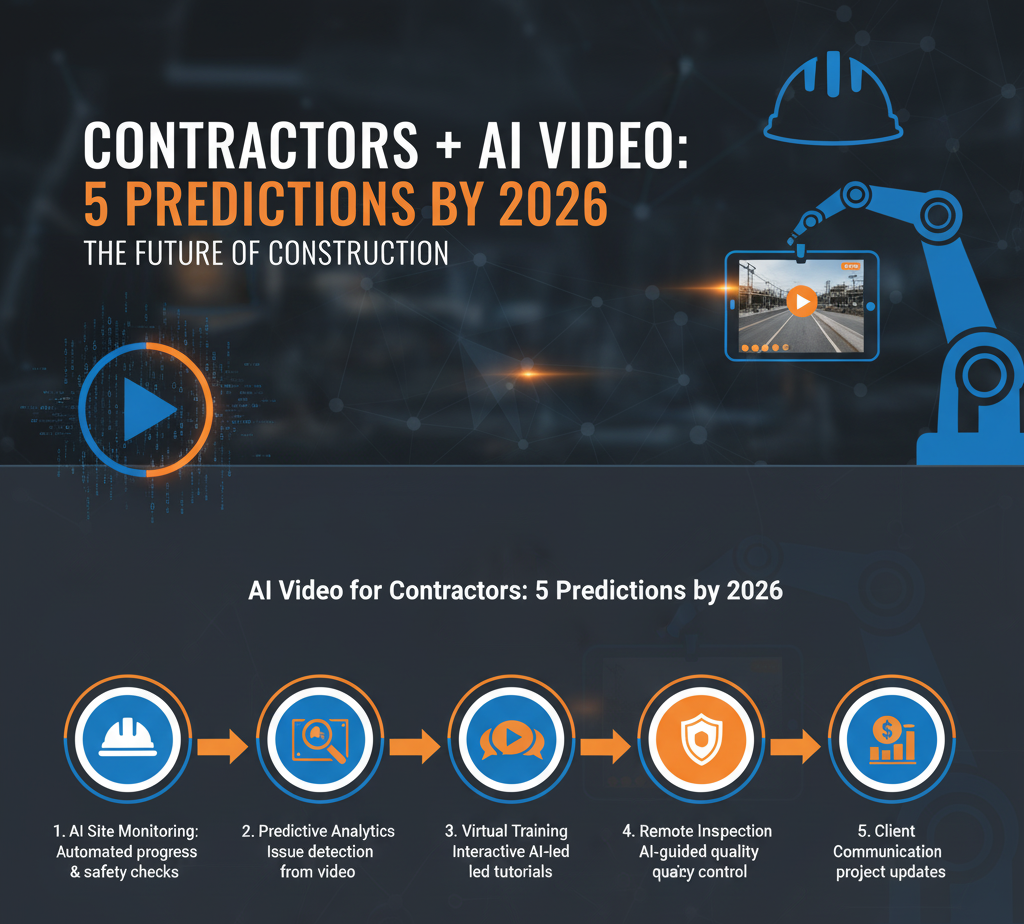
5 Predictions for How Contractors Will Use AI Video by 2026.
1. Progress tracking video with AI analysis
By 2026, contractors will routinely mount site cameras or drone feeds and use AI-driven video analysis to automatically monitor work progress, materials arrival, and schedule adherence. Platforms are already able to compare on-site video to BIM models or scheduled milestones. This means fewer manual photo reports, fewer surprises, and more accurate data for decision-making. For contractors, the key is to start capturing clean, consistent video now so AI tools have reliable input.
2. Safety training and compliance video made easy
Video combined with AI will allow contractors to generate training modules that show real or simulated site activities, detect risky behaviors such as missing safety gear or unsafe movements, and flag them for review. Current systems already use telematics and video to identify unsafe acts in real time. By 2026, this will become a standard compliance workflow instead of a one-off training exercise. The practical step is to record key site tasks now, tag them clearly, and build a library that your AI system can learn from.
3. Client-facing and pre-construction video visualizations
Instead of static renders or walkthroughs, contractors will use AI-generated videos to show clients how their project will unfold, including site preparation, excavation, framing, and finishing. Tools already allow multiple visual styles and realistic phasing simulations. This approach builds trust, aligns expectations, and reduces change orders. If you are a contractor or an agency that works with contractors, include video visualization early in your proposals to help clients make faster, more confident decisions.
4. Automated documentation and claims-support video
By 2026, contractors will rely on AI video tools to document site conditions, capture deliveries, record equipment movement, and support claims or change orders. AI pattern analysis helps detect anomalies such as delays or missing materials faster than human review. For practical use, set up mobile or fixed devices to record critical stages and store them systematically for quick retrieval when needed.
5. Marketing and lead generation video content produced at scale
Contractors will also use AI video generation to produce marketing content such as before-and-after build sequences, time-lapses, and virtual site tours customized for local markets. This content helps contractors stand out, attract local clients, and showcase expertise without heavy production costs. For agencies, this opens a strong opportunity to offer AI video marketing services that deliver measurable value to contractors.
Key Points to Remember
AI video tools are becoming part of daily contractor operations, from progress tracking to client communication.
Contractors should begin recording and organizing clean video data now to prepare for AI adoption.
Safety, documentation, and compliance will be major areas of improvement through AI video.
Agencies can build service packages around AI-driven workflows for contractors.
AI video supports both operational and marketing needs for contractors who want efficiency and credibility.
FAQs
Q: What are practical ways contractors can use AI video for site progress tracking?
A: Contractors can mount fixed cameras or drones, upload daily footage into an AI platform that analyzes work completed versus the schedule, and receive alerts when tasks are delayed. This turns manual reporting into visual, automated insights.
Q: How will AI-driven video improve safety and compliance for construction companies?
A: AI video enables automatic detection of unsafe behavior, missing PPE, or restricted area breaches. It can also produce training videos based on real footage, improving safety awareness and long-term retention.
Q: Can contractors use AI video for client presentations and win more contracts?
A: Yes. Contractors can create simulations of how the project will progress, show realistic visuals, and reduce client uncertainty. This builds trust and improves conversion rates during bids and proposals.
Q: What steps should contractors or agencies take now to prepare for AI video adoption?
A: Start by organizing video capture systems such as drones or stationary cameras, label and store footage clearly, and choose one use case like progress tracking to pilot. Measure its impact to scale efficiently later.
Q: Will AI video replace project managers or site supervisors?
A: No. AI video is designed to support human decision-making. Supervisors will still interpret complex site situations and manage teams, while AI handles data collection and pattern recognition to save time and reduce errors.