
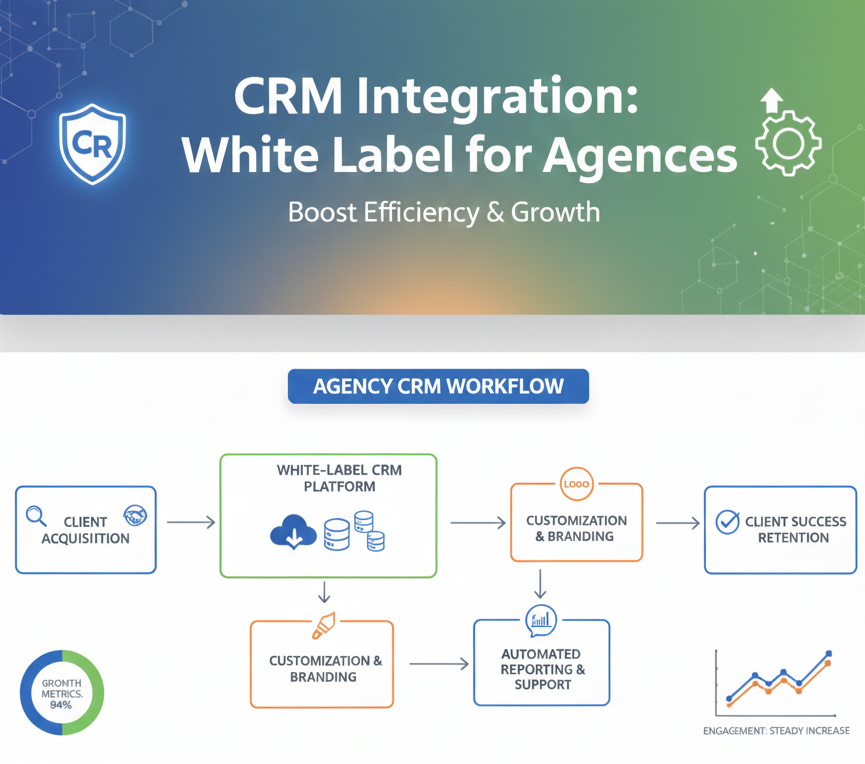
CRM integration has become one of the most in-demand services for agencies across Australia, the UK, and the USA. As businesses rely more on data, automation, and seamless customer communication, agencies are stepping in to provide CRM solutions that feel fully branded and built in-house. White label CRM integration allows agencies to deliver expert-level systems without needing large technical teams, expensive infrastructure, or years of development.
Why White Label CRM Integration Matters
Many business owners struggle to keep track of leads, sales, and customer interactions across different platforms. When these systems are disconnected, teams lose time, sales pipelines become messy, and customers receive inconsistent experiences. Agencies offering white label CRM integration help solve this by connecting websites, landing pages, email marketing platforms, payment tools, and automation systems into one unified workflow.
This approach allows agencies to serve clients more efficiently while building long-term partnerships. Since the CRM is fully branded under the agency’s name, clients see the agency as the direct provider of the technology, which strengthens trust and positions the agency as a strategic partner rather than just a service vendor.
How Agencies Deliver CRM Integration Behind the Scenes
Successful CRM integration follows a structured process that ensures accuracy and reliability. It usually includes:
1. Understanding the client’s workflow
Agencies map out how leads move from the website to the sales pipeline and identify gaps in follow-up, reporting, or automation.
2. Selecting the right CRM
Whether the client needs HubSpot, Zoho, Salesforce, or a custom CRM, agencies choose the platform that best fits the business model, team size, and long-term goals.
3. Connecting all systems
This includes linking forms, chat widgets, scheduling tools, email platforms, SMS systems, and payment gateways. The goal is to create a single source of truth for all customer activity.
4. Automation setup
Agencies build workflows, lead nurturing sequences, reminder systems, onboarding automation, deal tracking, and reporting tools to ensure the CRM works for the business.
5. Training and support
To help clients use the CRM effectively, agencies provide training, video tutorials, and ongoing technical support and updates.
Key Points to Remember
- CRM integration improves sales, follow-up, and customer experience.
- White label CRM services allow agencies to scale without large internal teams.
- A strong integration strategy focuses on workflow mapping, automation, and system connectivity.
- Clients receive a fully branded solution that positions the agency as a long-term partner.
- This service creates predictable revenue and long-lasting client relationships.
FAQs
1. What is white label CRM integration and how does it work for agencies?
It allows agencies to offer CRM setup and automation under their own brand while the technical work is handled by a partner.
2. Why do businesses in Australia, the UK, and the USA need CRM integration?
Most businesses use disconnected tools. CRM integration unifies customer data and improves sales performance.
3. Which CRM platforms can be integrated through white label services?
Popular options include HubSpot, Zoho, Salesforce, GoHighLevel, and custom CRM systems.
4. How long does CRM integration normally take?
Simple setups can take a few days, while advanced automation workflows can take several weeks.
5. Can agencies offer ongoing support after the CRM is integrated?
Yes, many agencies include maintenance, training, and support as part of their monthly retainers.