
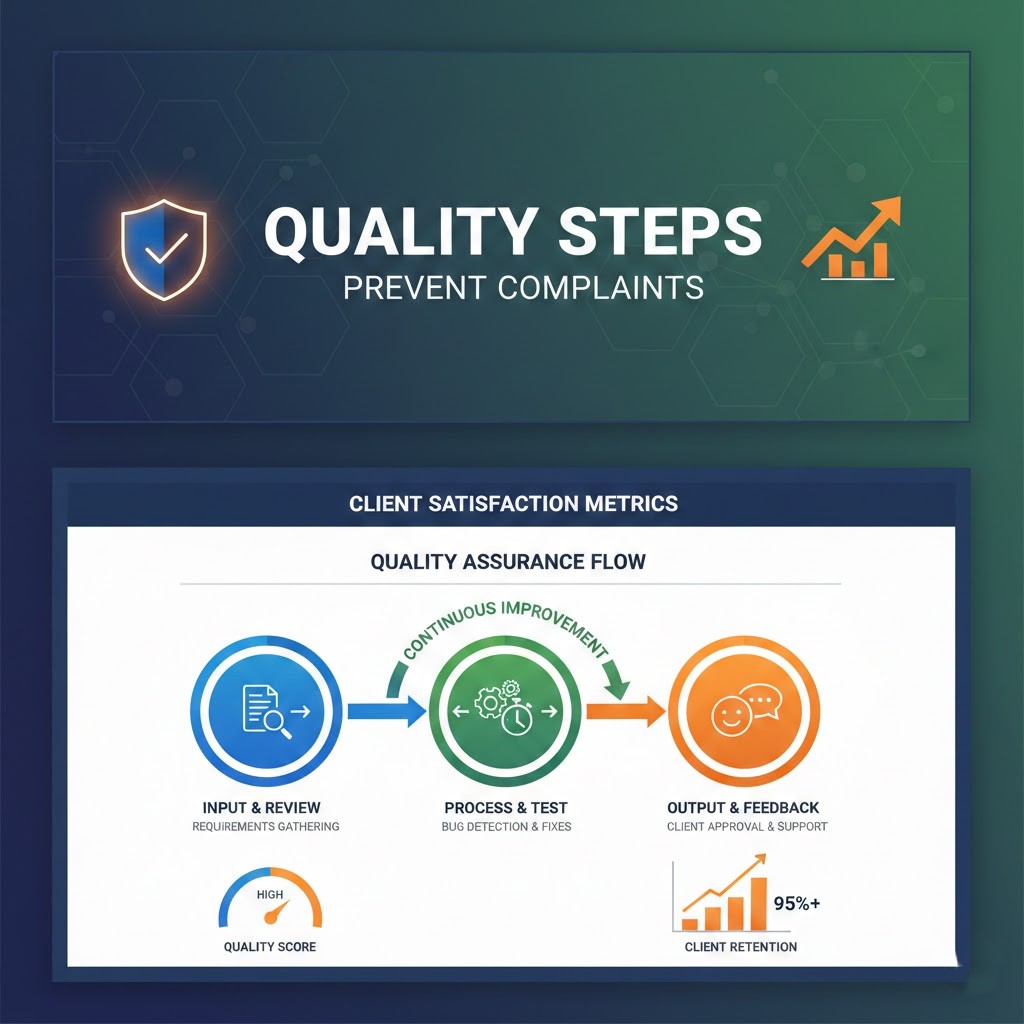
In web development and digital services, most client complaints do not happen because of bad intentions. They happen because of missed details. Small oversights in testing, communication, or documentation turn into bigger problems later. That is why strong Quality Assurance Steps That Prevent Client Complaints are not optional. They are essential for agencies and businesses in Australia, the UK, and the USA that want consistent results and long term client relationships.
At Intramind Solutions, we have seen how structured quality assurance improves client satisfaction, reduces revision cycles, and protects reputation.
Why Quality Assurance Matters in Web Projects
Clients usually complain about delays, broken features, design inconsistencies, or poor communication. These issues often come from gaps in process rather than lack of skill.
A clear website quality assurance process helps ensure:
- Requirements are documented correctly
- Design matches approved mockups
- Functionality works across devices and browsers
- Performance meets speed expectations
- Content is accurate and aligned with brand guidelines
When these checks are done before launch, client complaints drop significantly.
Step 1: Clear Project Scope and Documentation
The first and most overlooked quality assurance step is proper documentation. Before development begins, the project scope should clearly outline:
- Features and functionality
- Timeline and milestones
- Design expectations
- Content responsibilities
For agencies in the USA, UK, and Australia, this is critical because many projects involve remote collaboration. Clear documentation reduces misunderstandings and protects both parties.
Long tail keyword example: how to prevent client complaints in web development projects.
Step 2: Structured Testing Before Client Review
Many teams send work to clients before properly testing it. That creates unnecessary back and forth.
A professional website QA checklist should include:
- Cross browser testing
- Mobile responsiveness testing
- Form and payment gateway testing
- Page speed testing
- Broken link checks
- Security validation
Testing internally first shows professionalism and builds trust.
Step 3: Staging Environment for Safe Review
Never test directly on a live website. A staging environment allows clients to review safely without affecting real users. This is especially important for ecommerce websites and service businesses relying on online bookings.
Using staging reduces risk and demonstrates responsible web development practices.
Step 4: Pre Launch Client Walkthrough
Instead of sending a link and waiting for feedback, schedule a structured walkthrough. Guide the client through:
- Key features
- Admin panel basics
- Content editing process
- Performance improvements
Educational psychology tells us that people retain more when they are shown and explained rather than left to explore alone. This step reduces confusion and post launch complaints.
Step 5: Post Launch Monitoring and Support
Even with strong testing, real users behave differently. Monitor:
- Website speed
- Error logs
- User behavior
- Conversion tracking
Offering short term post launch support reassures clients and strengthens long term partnerships.
Key Points to Remember
- Most client complaints come from process gaps, not technical skill gaps
- Clear documentation prevents misunderstandings
- Internal testing should always happen before client review
- Staging environments reduce risk
- Guided walkthroughs improve client confidence
- Ongoing monitoring protects your reputation
FAQs
What are the most common causes of client complaints in web development?
Delays, broken functionality, unclear communication, and mismatched expectations are the most common causes.
How can agencies reduce website revision cycles?
By using a detailed website quality assurance checklist and testing internally before presenting work to clients.
Why is cross browser testing important for client satisfaction?
Users in the USA, UK, and Australia use different browsers and devices. Ensuring compatibility prevents user complaints that clients blame on the agency.
What is a staging environment in web development?
A staging environment is a private version of a website used for testing before going live.
How does quality assurance improve client retention?
Consistent delivery builds trust, reduces friction, and increases referrals.
Strong Quality Assurance Steps That Prevent Client Complaints are not about adding extra work. They are about building systems that protect your clients and your reputation. At Intramind Solutions, we provide structured quality assurance and professional web development services designed to prevent costly issues before they happen. If you want reliable website delivery backed by proven quality control processes, learn more about how Intramind Solutions can support your next project.