
Introduction
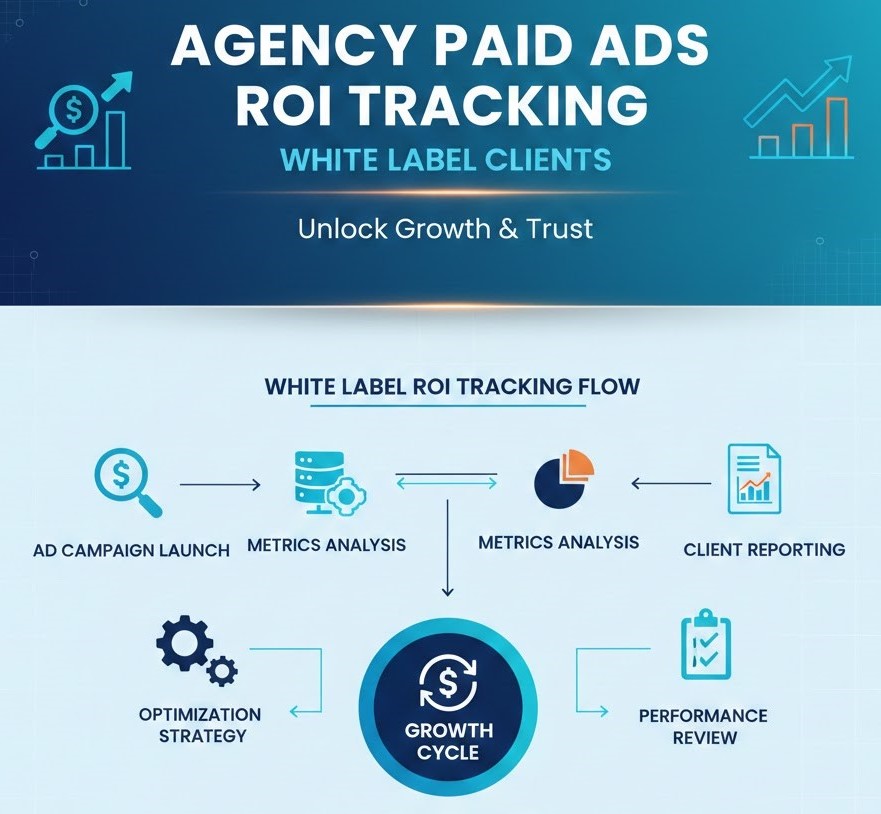
For agencies managing white label clients, understanding the return on investment (ROI) for paid ads is essential. Paid ads, when executed effectively, can drive leads, conversions, and measurable growth. However, tracking their performance accurately requires more than just checking clicks or impressions. At Intramind Solutions, we guide agencies on how to measure paid ads ROI with precision, helping them deliver transparent results to clients in Australia, the UK, and the USA.
Understanding Paid Ads ROI
ROI for paid ads refers to the revenue generated compared to the amount spent on campaigns. A high ROI indicates that campaigns are cost-effective and driving real business results. Agencies often work with multiple clients, each with unique goals. Tracking ROI consistently across different ad platforms, such as Google Ads, Facebook Ads, and Instagram Ads, ensures clients see tangible results.
Step 1: Set Clear Campaign Goals
Before running any paid ads, agencies should define clear objectives. Are you aiming for lead generation, website traffic, or direct sales? Setting goals upfront allows for precise tracking and performance measurement. For instance, a campaign targeting new plumbing clients in Sydney should track form submissions or calls, while an e-commerce client in London might focus on completed purchases.
Step 2: Use Accurate Tracking Tools
Agencies rely on tools like Google Analytics, Facebook Pixel, and UTM parameters to monitor paid ads performance. These tools provide detailed insights into user behavior, conversion paths, and revenue generated from each campaign. Accurate tracking ensures agencies can calculate ROI confidently and report transparent results to white label clients.
Step 3: Monitor Key Performance Metrics
Tracking paid ads ROI requires attention to key metrics:
- Cost per lead or acquisition
- Conversion rate
- Customer lifetime value
- Return on ad spend (ROAS)
Monitoring these metrics over time highlights which campaigns perform best and which need adjustments.
Step 4: Report and Adjust Regularly
Regular reporting to white label clients builds trust and demonstrates accountability. Agencies should present clear, easy-to-understand reports that outline ROI, insights, and actionable recommendations. Making adjustments based on performance data ensures campaigns continually improve and deliver value.
Key Points to Remember
- Set measurable goals for each campaign
- Use reliable tracking tools for accurate data
- Focus on high-impact metrics like conversion rate and ROAS
- Provide transparent reports to clients
- Continuously refine campaigns based on results
FAQs
1. How do agencies calculate paid ads ROI?
ROI is calculated by dividing the revenue generated by ad spend and multiplying by 100 to get a percentage.
2. Which tracking tools are best for paid ads?
Google Analytics, Facebook Pixel, and UTM tracking are essential for precise monitoring.
3. Can ROI vary across platforms?
Yes, ROI differs between platforms like Google, Facebook, and Instagram depending on targeting, ad type, and audience engagement.
4. How often should agencies report ROI to clients?
Monthly reporting is standard, but high-performing campaigns may require weekly updates for more actionable insights.
5. What if a campaign shows low ROI?
Analyze metrics, adjust targeting, refine creatives, or optimize bidding strategies to improve performance.
Conclusion
Understanding and tracking paid ads ROI is critical for agencies managing white label clients. By setting clear goals, using reliable tracking tools, and regularly reporting results, agencies can prove the value of their campaigns. At Intramind Solutions, we also help agencies implement and monitor paid ads campaigns to ensure measurable results. Learn more about how we can support your paid ads strategy.(https://intramindllc.com/web-designing/)