
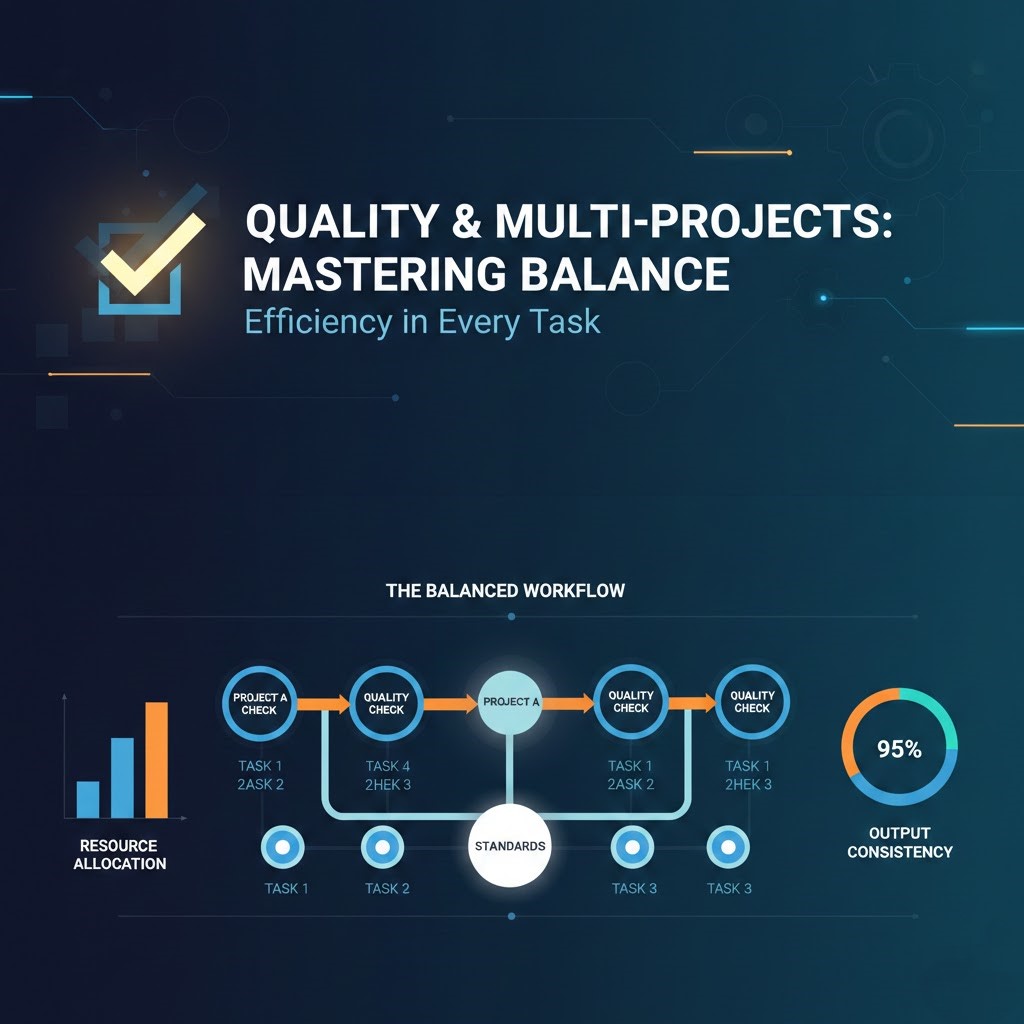
Managing multiple projects at the same time is a reality for many agencies, consultants, and growing businesses across Australia, the UK, and the USA. Whether you are delivering web development, marketing, or operational services, maintaining consistent quality while juggling deadlines can feel challenging. From our real-world experience working with teams of different sizes, quality is not about working harder. It is about working with clarity, structure, and discipline.
Understand What “Quality” Really Means for Each Project
Quality is not a universal standard. Every project has different goals, success metrics, and client expectations. Before work begins, clearly define what quality looks like for each project. This includes scope, timelines, deliverables, and acceptable standards. When expectations are clear from day one, teams make fewer mistakes and avoid unnecessary revisions.
Prioritise Projects Based on Impact, Not Urgency
A common mistake in multi-project management is reacting only to urgent tasks. High-quality project delivery comes from prioritising work based on impact. Ask which tasks move the project forward and which tasks can wait. This mindset reduces cognitive overload and helps teams stay focused on meaningful outcomes rather than constant firefighting.
Build Repeatable Systems and Processes
Consistency comes from systems. Standard operating procedures, project templates, and clear workflows reduce decision fatigue and errors. For example, using the same quality checklist for every project review ensures nothing is missed. Businesses that handle multiple projects successfully rely on process, not memory.
Limit Context Switching
Switching between tasks too frequently reduces accuracy and increases stress. Group similar tasks together and allocate focused time blocks for each project. This approach improves concentration and helps maintain a high standard of work across all projects.
Communicate Progress Clearly and Regularly
Quality often breaks down when communication is unclear. Regular updates keep clients and internal teams aligned. Clear communication also allows issues to be identified early, when they are easier to fix. Transparency builds trust and prevents last-minute quality compromises.
Review, Reflect, and Improve
After completing a project, review what worked and what did not. This reflection helps refine processes for future work. Over time, small improvements compound into a strong quality-first culture.
Key Points to Remember
- Define quality clearly for every project
- Prioritise work based on impact, not urgency
- Use systems to maintain consistency
- Reduce context switching to improve focus
- Communicate progress regularly
Frequently Asked Questions
How do you maintain quality when managing multiple clients?
By setting clear expectations, using standard processes, and scheduling focused work time for each client.
What is the biggest risk when handling multiple projects?
Poor prioritisation, which often leads to rushed work and reduced quality.
Can small teams handle multiple projects without losing quality?
Yes, if they rely on strong systems, clear communication, and realistic timelines.
How do you balance speed and quality in project management?
By planning properly and avoiding last-minute changes that disrupt workflows.
What tools help maintain quality across multiple projects?
Project management software, shared documentation, and quality checklists are essential.
If you are looking to improve how your business manages multiple projects without sacrificing results, we also provide professional support in project workflows, digital systems, and web designing services tailored for growing businesses. Learn more about how Intramind Solutions can help you maintain quality while scaling your operations through expert web designing and digital solutions.