
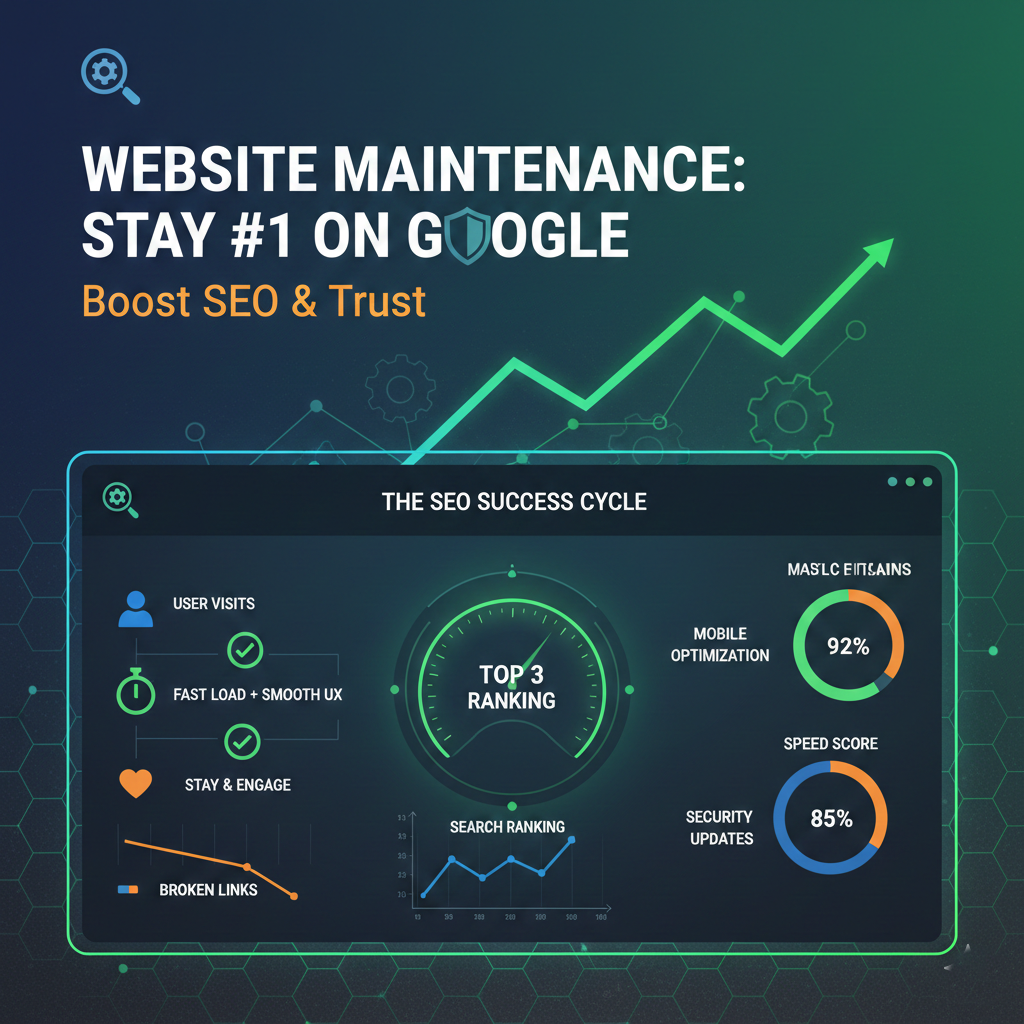
In today’s digital world, your website is more than just an online presence; it’s the backbone of your brand. Yet many businesses invest in web design once and forget about it afterward. The truth is, regular website maintenance isn’t optional anymore. Search engines like Google constantly update their algorithms, and websites that stay fresh, secure, and optimized are rewarded with higher rankings, better visibility, and stronger user trust.
Why Website Maintenance Matters
A well-designed website is only the beginning. Over time, plugins, themes, and integrations can become outdated, security vulnerabilities can appear, and page load speeds can slow down. Each of these issues can directly affect your SEO performance and overall user experience.
Regular maintenance ensures your site continues running smoothly and remains compliant with Google’s latest ranking factors. This includes updating your CMS (like WordPress), optimizing site performance, fixing broken links, improving mobile responsiveness, and updating content with relevant keywords. These small but consistent updates signal to Google that your website is active, relevant, and worth ranking.
How Maintenance Impacts SEO and Performance
Google’s ranking system heavily favors websites that load quickly, have no errors, and offer valuable, up-to-date content. If your site lags, users leave, increasing your bounce rate, which is a major negative ranking factor. Similarly, outdated SSL certificates or broken links can reduce your site’s credibility and trustworthiness.
Regular website maintenance helps prevent these problems before they harm your rankings. It ensures your sitemap and metadata are optimized, your images are compressed for speed, and your content continues to match the intent of real search queries. This holistic approach keeps both your users and Google happy.
Security and User Trust
Cybersecurity is another crucial part of maintenance. Hackers often target outdated websites, and a single breach can destroy user trust and damage your brand reputation. Routine updates, security patches, and backups protect your site and customer data. When users know your site is secure, they’re far more likely to engage and convert.
The Business Impact
An updated, secure, and optimized website not only performs better in search results but also builds credibility with your audience. It reflects professionalism, reliability, and a commitment to quality, which are traits that influence how potential customers perceive your brand.
Key Points to Remember
- Regular website maintenance boosts SEO performance and ranking.
- Updated content signals relevance to Google.
- Security updates protect your business and user data.
- Optimized performance improves user experience and conversions.
- A healthy website reflects professionalism and trust.
FAQs
1. How often should I perform website maintenance?
Most websites benefit from monthly maintenance, including plugin updates, security scans, and performance checks.
2. Can skipping maintenance hurt my Google rankings?
Yes. Outdated websites tend to load slowly, have broken links, and may become insecure, all factors that lower rankings.
3. Does maintenance include updating website content?
It should. Regularly updating your content with relevant keywords and insights helps maintain SEO strength and relevance.
4. What’s the difference between a redesign and maintenance?
A redesign focuses on visuals and structure, while maintenance focuses on performance, security, and optimization. Both are essential but serve different goals.
5. Can professional website maintenance save me money long-term?
Absolutely. Preventing major issues through consistent maintenance is far cheaper than fixing a hacked or broken website later.