
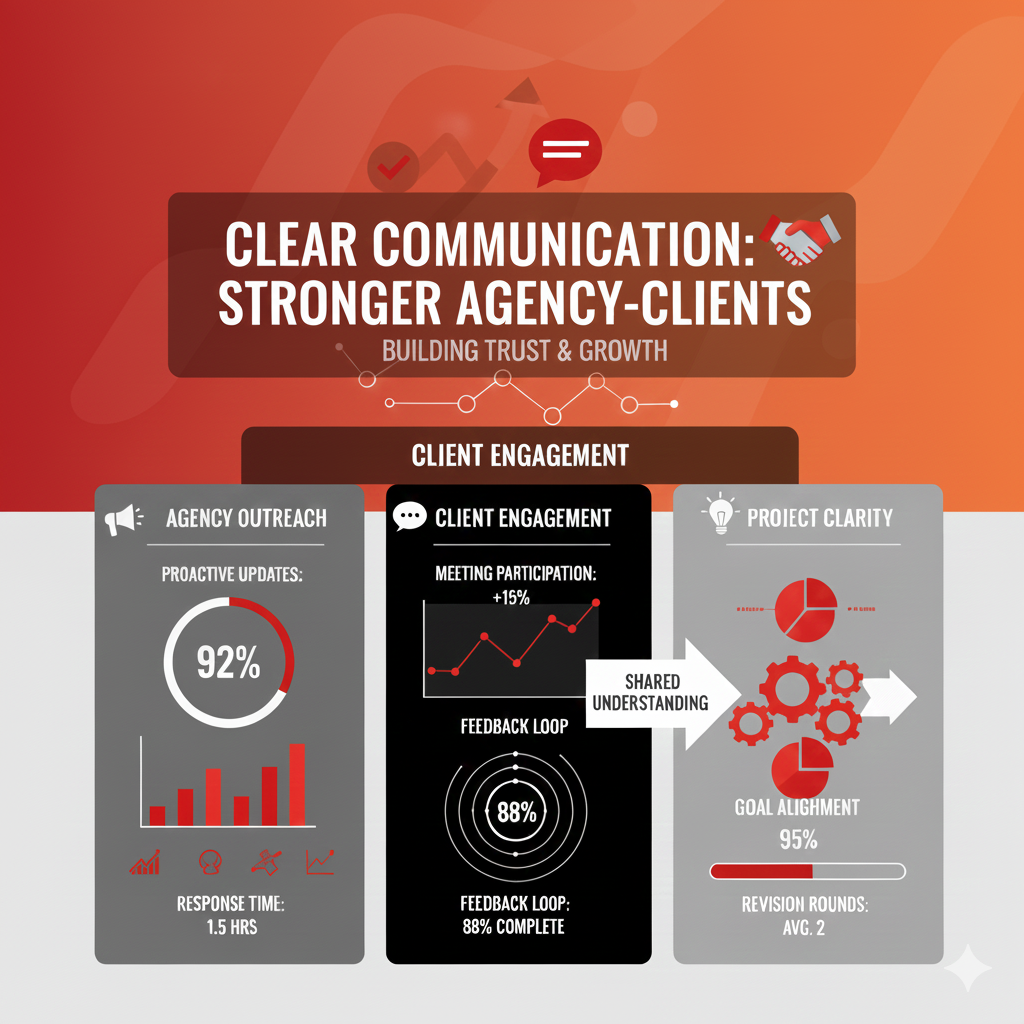
Strong agency-client relationships are the cornerstone of successful projects and long-term partnerships. Whether you’re in Australia, the UK, or the USA, clear communication between agencies and clients ensures that expectations are aligned, goals are achieved, and misunderstandings are minimized. At Intramind Solutions, we’ve worked with diverse businesses across multiple industries, and our real-world experience shows that communication isn’t just a nice-to-have — it’s a strategic advantage.
Why Communication Matters in Agency-Client Partnerships
Effective communication creates trust. When clients clearly understand project timelines, deliverables, and potential challenges, they feel confident in the agency’s capabilities. Conversely, agencies that actively listen to clients’ needs and feedback are better positioned to deliver solutions that match business objectives. Poor communication often leads to missed deadlines, unsatisfied clients, and even project failure.
In practical terms, communication means more than just sending emails. It involves regular check-ins, transparent reporting, and proactive updates. For example, when working with a client on a web redesign, we ensure weekly progress calls and visual updates so they can see their project evolve in real time. This approach minimizes misunderstandings and builds a sense of collaboration.
Real-World Tips for Improving Communication
- Set Clear Expectations Early: Define project scope, timelines, and responsibilities at the start.
- Use Visual Tools: Flowcharts, wireframes, or prototypes help clients grasp complex ideas quickly.
- Encourage Questions: Create an environment where clients feel comfortable asking for clarifications.
- Document Everything: Written summaries of meetings and decisions prevent confusion later.
- Tailor Communication Style: Some clients prefer detailed reports, while others want short, concise updates.
Key Points to Remember
- Clear communication builds trust and strengthens relationships.
- Active listening is as important as conveying information.
- Regular updates reduce the risk of misunderstandings.
- Visual tools and documentation enhance clarity.
- Tailoring communication to client preferences improves satisfaction.
FAQs
1. How often should agencies communicate with clients?
Ideally, agencies should provide updates weekly or bi-weekly, depending on project complexity, and immediately communicate any delays or changes.
2. What is the best way to present complex project updates?
Use visuals like charts, wireframes, or mockups along with short written summaries. Visual aids make technical information easier to understand.
3. Can poor communication affect project costs?
Yes. Misunderstandings often lead to revisions, delays, or scope creep, which can increase costs for both agencies and clients.
4. How do I know if my agency is communicating effectively?
A good sign is clarity and transparency in updates, proactive problem-solving, and responsiveness to your questions.
5. How can agencies improve communication skills?
Training in active listening, structured reporting, and client psychology can significantly improve communication quality.